What is WEEE?
WEEE is the abbreviation of Waste Electrical and Electronic Equipment, that is, the recycling directive for scrapped electrical and electronic equipment. Since August 13, 2005, manufacturers of electrical and electronic equipment circulating in the EU market must be legally responsible for paying the cost of recycling end-of-life products. Relevant supporting recycling facilities enable end-users of electrical and electronic products to dispose of end-of-life equipment conveniently and free of charge.
What is the Battery Directive?
The Battery Directive entered into force in Germany on December 1, 2009 and stipulates the "environmentally sound disposal of batteries and accumulators placed on the market and taken back". All products with batteries need to be registered with BattG. The aim of BattG is to increase the percentage of returned batteries and accumulators, as they contain not only valuable raw materials, but also substances that are harmful to the environment and health. Manufacturers, distributors or importers of batteries are required by law to contribute to handling costs.
The difference between WEEE and the battery directive
1. Different identification
Although the graphic signs of WEEE and battery instruction are both crossed-out wheeled trash cans, the WEEE logo has a solid thick black line below the trash can; while the battery instruction logo has no black line under the trash can, And the black line inside is hollow.
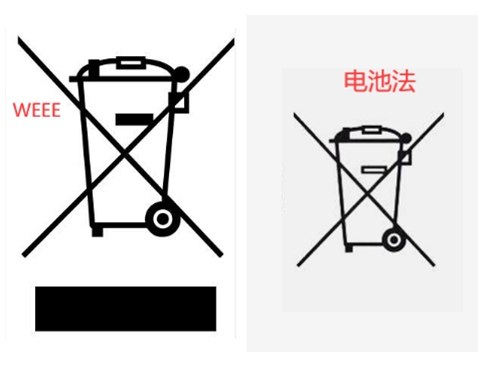
2. Different regulations
The regulation for WEEE is ElectroG; the regulation for the Battery Directive is BattG.
3. Different recycled products
WEEE is a waste electrical and electronic recycling directive, only electrical appliances are recycled, not batteries; while the battery directive is a battery recycling directive, which is dedicated to recycling batteries, not electrical appliances
4. The scope of registration is different
WEEE is for all electrical and electronic equipment in the EU, and all goods related to electrical appliances need to be registered; while the battery directive only targets electronic products with batteries.
What WEEE has in common with the Battery Directive
1. The EU requires both to be registered for compliance
2. These two requirements are the most investigated in Germany
3. The two logos are crossed wheeled trash cans
4. After the product is taken off the shelf, it needs to be moved to the warehouse and labelled
5. If a product is an electronic product with a battery, then both WEEE registration and battery instruction registration are required.
6. According to the WEEE and Battery Directives, the EU requires distributors or importers to be responsible for recycling.
7. Distributors or importers who violate the supervision of WEEE and the battery directive will be punished by the German regulatory authorities.
In general, both the WEEE and the battery directive are important regulatory regulations for the environmental protection department. Sellers need to pay attention to the distinction between the two when registering to avoid confusion and unnecessary losses.
Please contact our company ZRLK for WEEE and battery order processing, we will provide you with professional and efficient testing and certification services with favorable prices and considerate service. If you provide us with product pictures and specifications, we will give corresponding cycles, quotations and specific solutions according to your products. You are welcome to inquire!